
What is Oak Processionary Moth?

Oak Processionary Moth (Thaumetopoea processionea) is an invasive pest that poses a serious threat to oak trees and to human health. Originally from southern Europe, it has been established in London and parts of the South East since 2006 and is now a significant concern for homeowners, local authorities and land managers across the region.

The moth’s caterpillars feed on oak leaves, and in high numbers they can strip a tree of its foliage entirely, weakening it and leaving it vulnerable to secondary pests and disease. Left unmanaged, repeated defoliation over several years can cause lasting damage or even kill the tree.
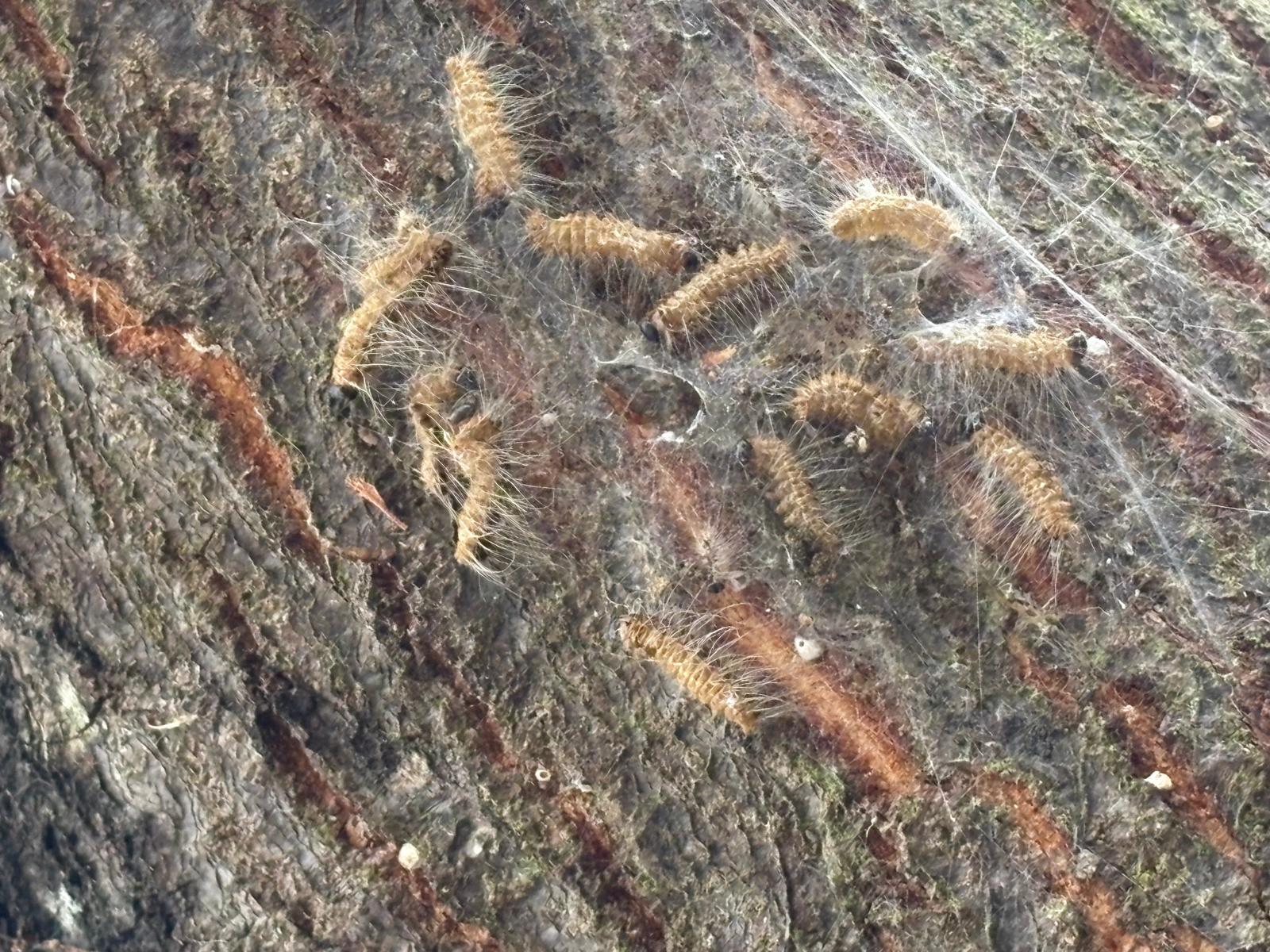
Oak processionary moth caterpillars clustered on oak bark

Health Risks

OPM caterpillars are covered in tiny hairs containing a protein called thaumetopoein. These hairs can be shed into the air and cause serious reactions in people and animals, including:

  • Skin rashes and irritation
  • Eye and throat inflammation
  • Breathing difficulties
  • Rarely, severe allergic reactions

Nests and caterpillars should never be approached or handled by untrained individuals. If you suspect OPM activity on your property, keep people and pets away and contact a qualified professional.

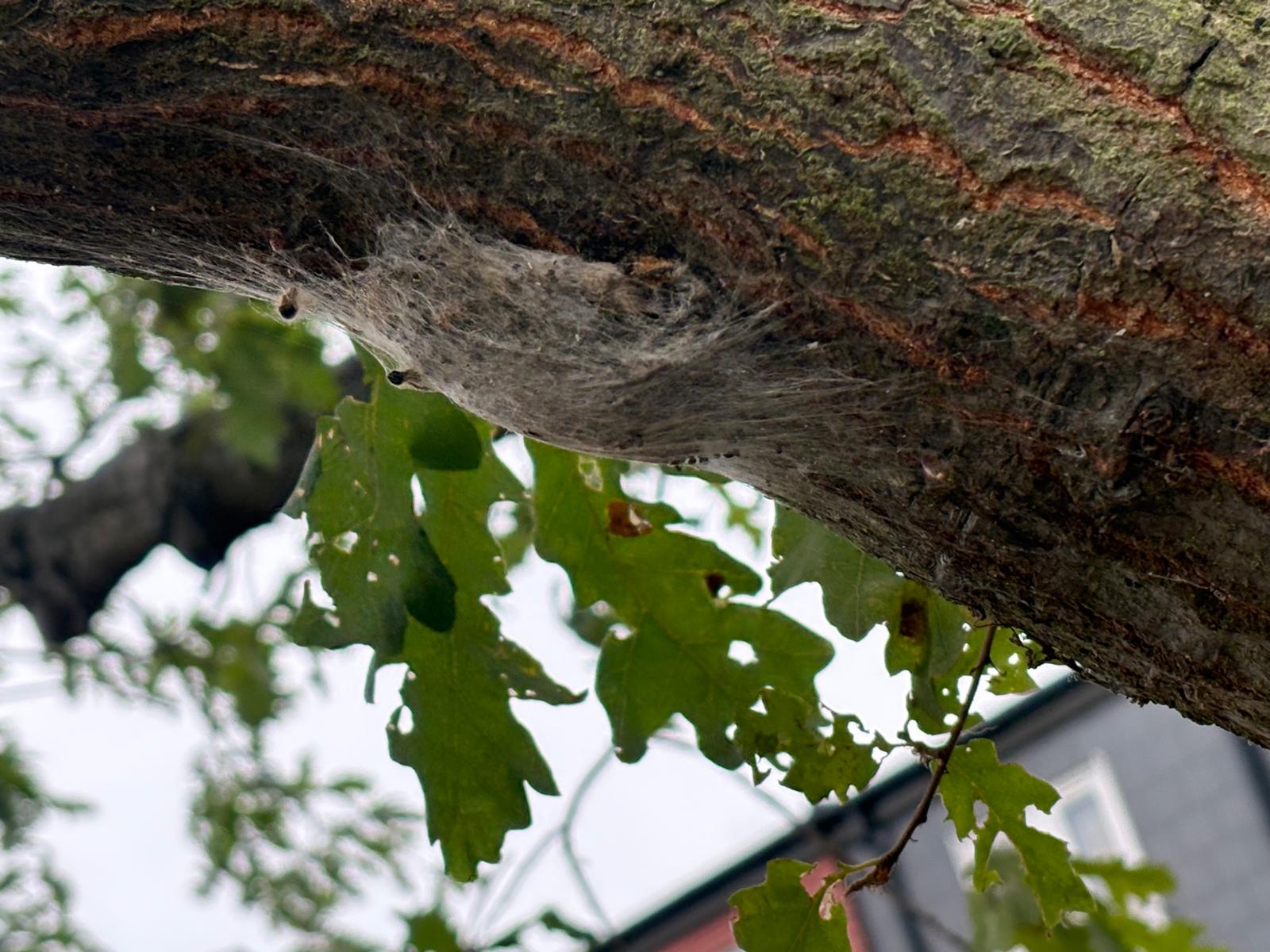
Oak processionary moth nest on the underside of an oak branch

Signs of OPM

  • White silken nests on oak tree trunks and branches, typically from June onwards
  • Caterpillars moving in nose-to-tail processions (hence the name), usually at night
  • Egg masses on upper branches in late summer and autumn
  • Stripped or thinning foliage on oak trees

OPM is present in London year-round, but caterpillars are most active between April and July, with nests persisting through to autumn.

Our OPM Services

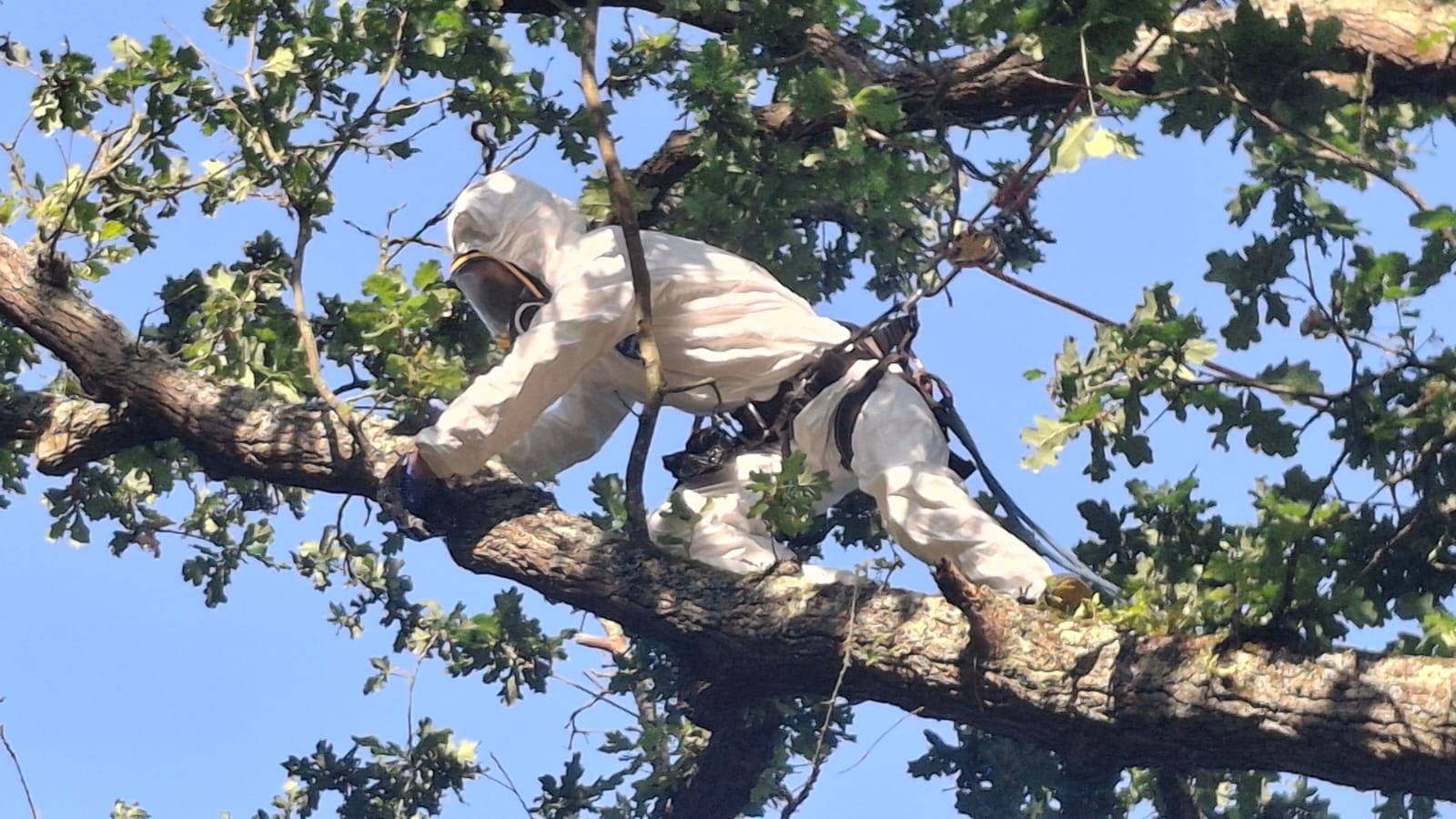
At Amber Tree Care, we are trained and equipped to safely manage Oak Processionary Moth on your property. Our services include:

Inspection and assessment — We will carry out a full survey of affected trees, identify the extent of the infestation, and advise on the most appropriate course of action.

Nest removal — Using specialist protective equipment, our team can safely remove OPM nests. Nests are double-bagged and disposed of as hazardous waste in line with current regulations.

Ongoing monitoring — We can provide follow-up visits to make sure the infestation has been effectively managed and advise on any further action.

All work is carried out in full compliance with Forestry Commission guidelines and current health and safety legislation.

Amber Tree Care tree surgeon in a full protective suit removing OPM nests in an oak

Why Act Quickly?

OPM spreads rapidly, and an untreated infestation can quickly affect neighbouring trees and properties. Nests are far easier, quicker and cheaper to deal with while they are small, before a large colony becomes established later in the season.

If you have oak trees on your property and are concerned about OPM, we recommend arranging an inspection as early as possible each year.

Get in Touch

Contact us for a free site assessment and advice on managing Oak Processionary Moth on your property.


WhatsApp us Email us Get a free quote Call 07957 515586